



EV Fire Blankets: Why Design Determines Safety
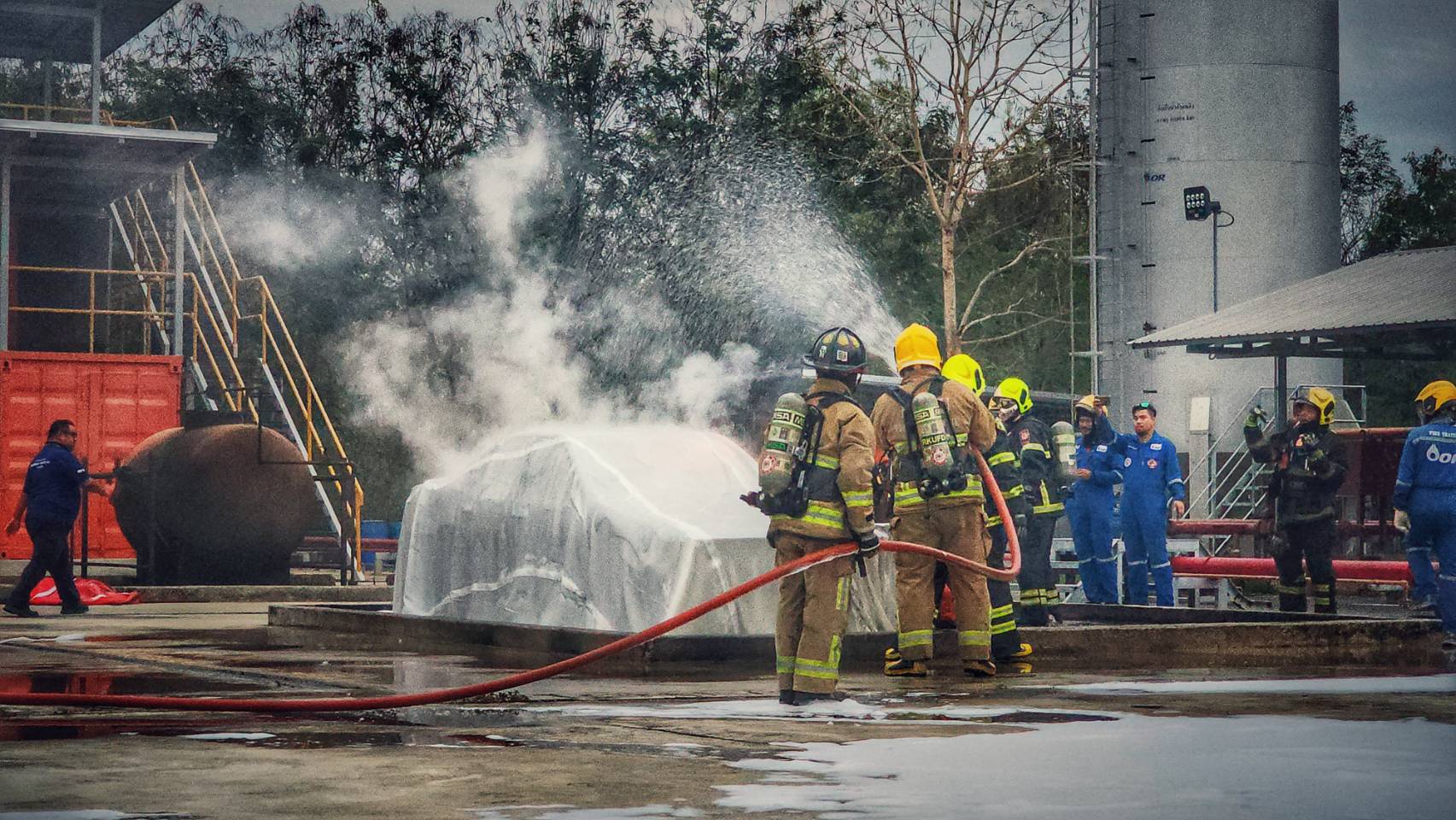
Understanding gas management, thermal containment, and why engineering differences between EV fire blankets are a matter of life and death for first responders.
About Fire Isolator
Fire Isolator is a specialist manufacturer of electric vehicle fire containment systems, founded more than five years ago with a single focus: developing solutions that work with the specific physics of lithium-ion battery fires, not against them. Our products are used by major automotive manufacturers, car carriers, multi-storey car park operators, EV charging infrastructure providers, logistics companies, and professional fire brigades across the US, Europe, the Middle East, Asia and beyond. To date, we have conducted more than 15 live fire tests on hybrid and full electric vehicles. Not one of those tests has produced a deflagration or explosion under the blanket.
That is not a marketing claim. It is the result of deliberate, physics-based engineering, and it is why the distinction between different types of EV fire blankets matters enormously.
Introduction: A Safety Debate That Deserves More Precision
Recent safety advisories from leading fire protection bodies in the United States have raised concerns about the use of fire blankets during electric vehicle fires. Those concerns are legitimate, and Fire Isolator takes them seriously. But an important distinction is being lost in the broader conversation: not all EV fire blankets are engineered the same way, and the difference in design philosophy has direct consequences for safety outcomes.
This article explains the core physics of electric vehicle fires, why gas behaviour under a blanket is the decisive safety variable, and how Fire Isolator’s approach to controlled containment is fundamentally different from the airtight, white-label products that have driven recent concern. It is written for fire service professionals, fleet and logistics operators, automotive facilities managers, and anyone responsible for EV fire preparedness in a high-risk environment.
The Core Issue: What Actually Happens During Lithium-Ion Thermal Runaway
When a lithium-ion battery pack enters thermal runaway, it does not behave like a conventional fuel fire. The electrochemical reactions occurring inside the cells generate their own oxygen as a by-product, which means the fire cannot be extinguished simply by removing oxygen from the environment. More critically for anyone deploying a fire blanket, thermal runaway produces large volumes of flammable gases and hydrocarbon vapours — continuously, and under pressure, for as long as the reaction continues.
These gases include hydrogen, methane, carbon monoxide, and a range of volatile organic compounds. When those gases are:
- confined in an enclosed space
- exposed to sustained heat
- unable to escape or be neutralised
the result is a textbook recipe for rapid ignition or a pressure event. Every experienced firefighter recognises this dynamic. It is not specific to EV fires. It is a fundamental principle of fire gas behaviour.
| The decisive question in EV fire blanket safety is not whether a blanket contains the fire. It is what happens to the gases produced beneath it. |
Not All EV Fire Blankets Are the Same: Two Fundamentally Different Design Philosophies
The market for EV fire blankets has grown rapidly over the past few years, and with it a wide range of products — many of them white-label, manufactured in low-cost facilities, and differentiated by very little beyond price. The term ‘EV fire blanket’ has become a generic label applied to products with profoundly different engineering assumptions. Understanding the difference begins with how each design treats gas behaviour.
1. Airtight (Fully Sealed) Blankets
Airtight blankets are built on the principle of oxygen exclusion. The logic is borrowed from conventional fire suppression: remove the oxygen, extinguish the fire. In a standard combustion scenario, this reasoning holds. In an EV thermal runaway scenario, it does not, because the battery generates its own oxidant internally.
The practical consequence of deploying an airtight blanket over a vehicle in active thermal runaway is that flammable gases produced by the battery have nowhere to go. They accumulate under the blanket, concentration rises, and the risk of sudden ignition or pressure build-up increases significantly. This is the design category referenced in the NFPA and UL Research Institutes advisory.
2. Controlled-Release (Gas-Managed) Blankets — The Fire Isolator Design
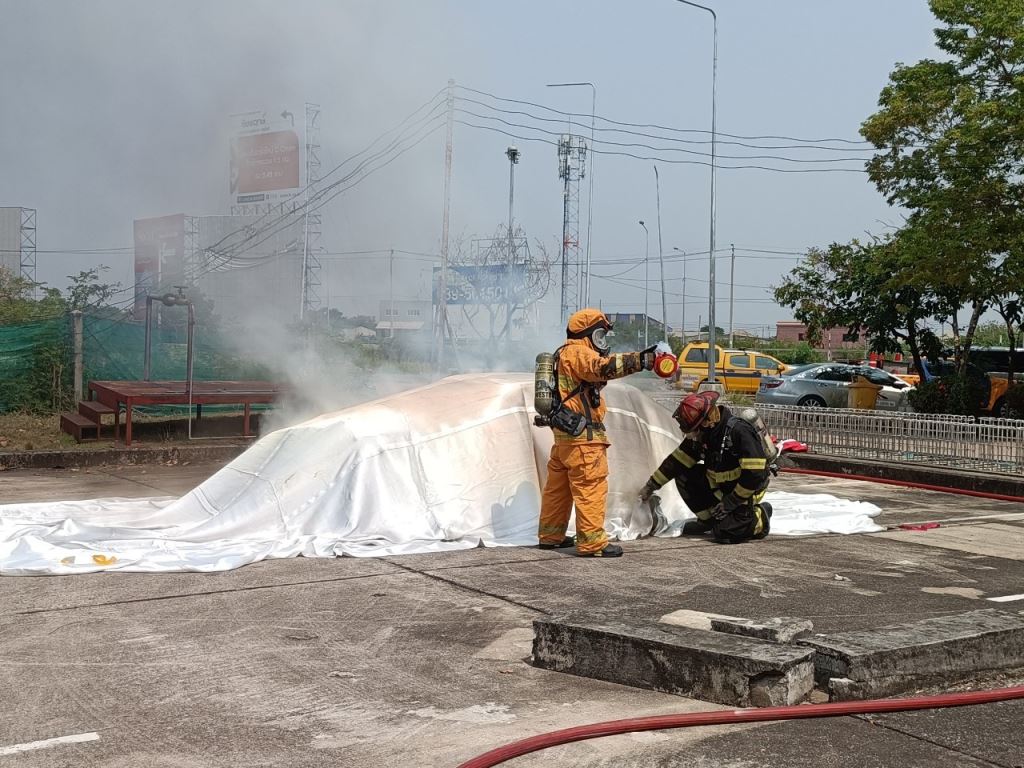
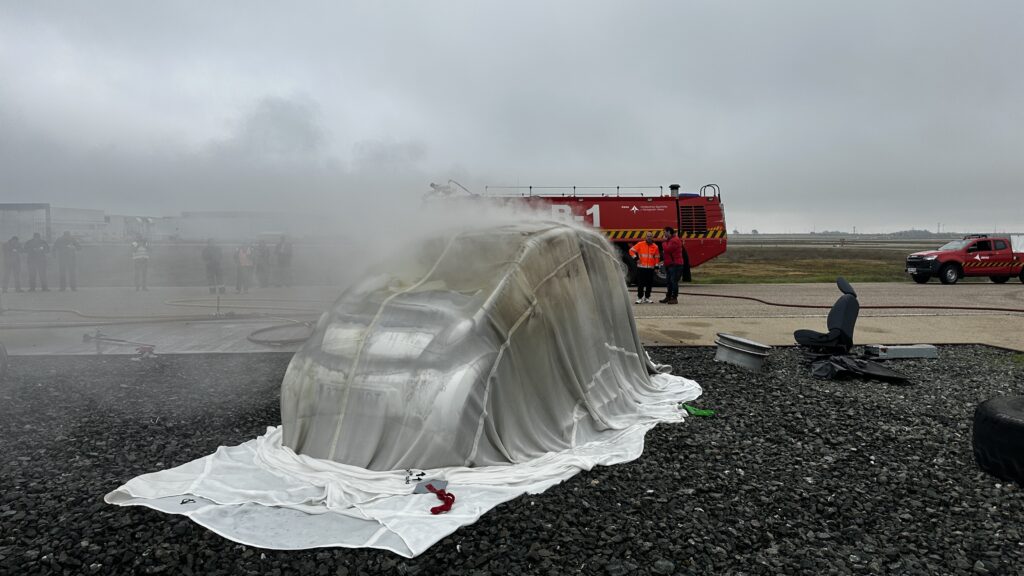
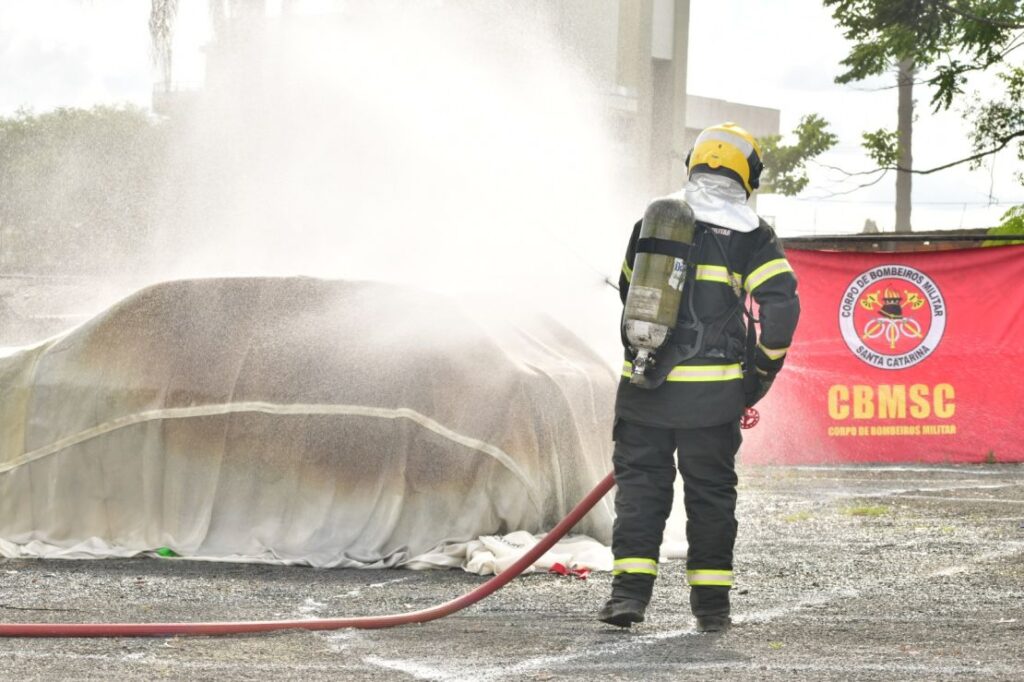
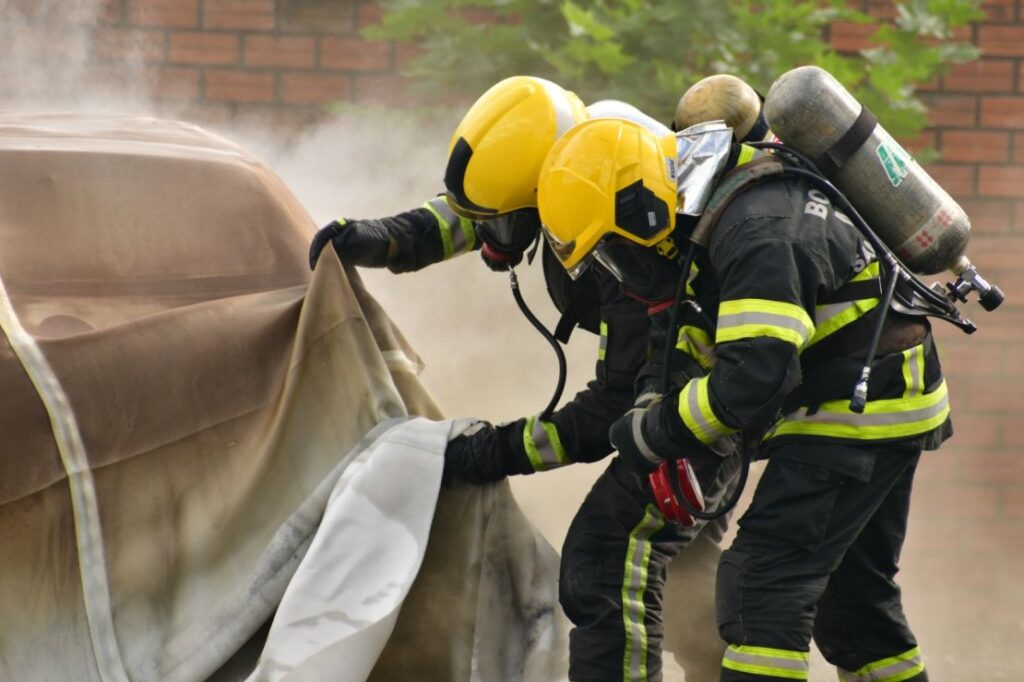
Fire Isolator blankets are built on a different premise entirely. Rather than attempting to seal the fire environment, our blankets are engineered to breathe: the fabric is specifically designed to allow gases and vapours to escape in a controlled and directional manner, while simultaneously containing flame spread, suppressing radiant heat, and holding a defined working space beneath the blanket where active suppression can be applied.
This venting behaviour is not a side-effect or a compromise. It was one of the first engineering decisions made when we began developing the Fire Isolator system five years ago, because our understanding of battery fire physics made it clear that gas accumulation, not flame spread, was the primary safety risk to manage.
The comparison table below summarises the key design differences:
| Design Factor | Airtight / Sealed Blankets | Fire Isolator Blankets |
| Design principle | Block all airflow | Controlled gas venting |
| Oxygen management | Seals oxygen out | Manages gas escape pathways |
| Gas accumulation risk | High; gases trapped under blanket | Low; gases exhaled through fabric |
| Pressure build-up | Significant | Significantly reduced |
| Works with suppression agents | No active suppression | Combined with aerosol suppression system |
| Relevant to NFPA advisory | Yes; tests used airtight design | No; fundamentally different design |
Fire Isolator’s Response to the NFPA and UL Research Institutes Advisory
Fire Isolator has noted and reviewed the safety advisory issued by the National Fire Protection Association’s Fire Protection Research Foundation and the UL Research Institutes / Fire Safety Research Institute regarding potential explosion risks associated with the use of fire blankets during EV thermal runaway incidents.
We consider the NFPA’s commitment to evidence-based firefighting safety standards to be essential, and we support continued research into EV fire suppression tactics. The researchers who conducted those experiments were right to flag the risks they observed. Those risks are real — for the specific product design that was tested.
| The experiments referenced in the advisory were conducted using a completely airtight fire blanket. Fire Isolator blankets are not airtight. They are gas-managed. These are not variations of the same design; they are fundamentally different engineering approaches with different safety profiles. |
Applying the conclusions of those tests to every EV fire blanket on the market would be the equivalent of identifying a structural safety issue in one specific vehicle and issuing a warning against all vehicles, regardless of differences in design and engineering. The advisory correctly identifies a real hazard in airtight blanket designs. It should not be read as a verdict on fire blankets as a category.
We welcome the opportunity for our products to be included in any future standardised testing framework, and we would encourage fire safety bodies to develop test protocols that account for the full range of blanket engineering approaches currently on the market.
The Fire Isolator System: Controlled Containment, Not Simple Suppression
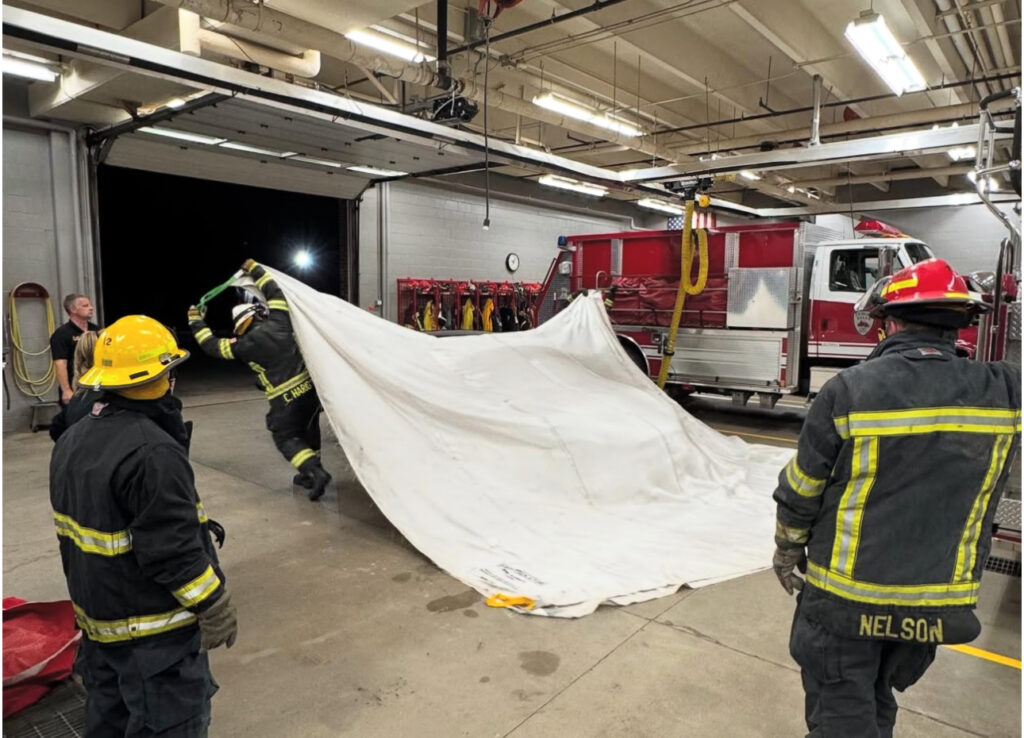
Fire Isolator is not a blanket company that also sells accessories. We are a systems provider. The blanket is the foundation of a complete, integrated EV fire containment approach, and each component has been designed to work in concert with the others during an active thermal runaway event.
Our blankets are rated to withstand sustained temperatures of up to 2,950°F (approximately 1,620°C) , a figure that places them well above the peak flame temperatures typically recorded in EV battery fires, which commonly exceed 1,000°C but rarely sustain above 1,400°C in vehicle-level incidents. That margin is intentional.
Gas-Managed Blanket Fabric
The blanket’s fabric (97% silica, with or without graphite impregnated) is engineered to allow the controlled escape of gases, smoke, and vapour while containing flame and radiant heat. This prevents the dangerous accumulation of flammable gases beneath the blanket and creates stable conditions for suppression agents to work effectively.
Potassium Nitrate Aerosol Suppression Units
The enclosed space created by the Fire Isolator blanket is not simply a containment zone; it is an active suppression environment. Our handheld potassium nitrate aerosol units are deployed into the space beneath the blanket, where they work directly on the flames emerging from the battery pack and simultaneously neutralise the flammable gases and vapours present. The controlled-venting design of the blanket is what makes this suppression approach viable: the aerosol needs a defined, semi-enclosed space to function. An airtight blanket creates a gas pressure problem. A Fire Isolator blanket creates a suppression opportunity.
Portable Water Mist Applicators
Cooling the vehicle structure and surrounding area is a critical part of managing an EV fire incident, particularly in high-risk locations such as enclosed car parks, ferry decks, or transport logistics facilities. Our portable water mist applicators are designed to work alongside the blanket system, reducing surface temperatures and managing exposure risk for first responders.
1,000V Insulated EV Fire Gun
For incidents requiring direct battery intervention, including cooling of the battery pack from below or penetration flushing, the Fire Isolator EV Fire Gun provides a purpose-built, electrically insulated tool rated for the voltage environments present in modern EV battery systems. It is designed to give fire crews safe access to the battery without compromising their protection.
Why Gas Management Is the Central Challenge in EV Fire Response
Electric vehicle fires differ from conventional vehicle fires in three ways that matter most for containment strategy.
First, the energy source is self-oxidising. A lithium-ion battery in thermal runaway produces its own oxygen as the cathode material breaks down. Oxygen exclusion, the dominant logic behind traditional fire suppression, simply does not apply.
Second, thermal runaway is self-sustaining and prolonged. Once a battery pack enters thermal runaway, the reaction cascades from cell to cell through the pack. This is not a fire that burns out quickly. Incidents lasting several hours are documented. Any suppression or containment strategy must account for sustained, continuous gas generation across the duration of the event.
Third, the gases produced are flammable, toxic, and generated under pressure. They will find the path of least resistance. In a sealed container — whether that is an airtight blanket, an enclosed car park level, or a ferry hold — they accumulate to dangerous concentrations. Gas management is therefore not an optional refinement to containment strategy. It is the central engineering challenge.
| In EV fire response, what happens beneath the blanket is at least as important as what happens above it. Containment without gas management is not a solution. It is a different problem. |
Reframing the Right Question
The public debate around EV fire blanket safety has largely been framed as a binary: are fire blankets safe, or are they not? That framing is not useful for fire services, fleet operators, or facility managers trying to make evidence-based procurement decisions.
The question that should be asked is: how is this specific blanket designed to manage gas behaviour during thermal runaway?
The answer to that question determines whether a blanket reduces risk for first responders or introduces new risk. Blanket weight, size, and price do not answer it. Material composition and venting design do.
This is why Fire Isolator publishes test data, maintains an active library of live-fire test footage available on our website and YouTube channel, and holds independent certifications including NFPA 701, EN ISO 13501-1 Class A1, DIN SPEC 91489, and ASTM D6413. Those certifications are not box-ticking exercises. They are the documented record of a product that has been tested against the actual conditions it will encounter.
Our Commitment to the Fire Service Community
Fire Isolator was built by people who take fire physics seriously. Our development process has always been driven by what actually happens during a lithium-ion thermal runaway event, not by what conventional fire suppression logic would predict. That means designing for gas behaviour, not just flame containment. It means testing in live-fire conditions with real vehicles, not laboratory proxies. And it means being transparent about what our products can and cannot do.
We are committed to:
- Engineering solutions grounded in real EV fire dynamics, with gas management as a primary design criterion
- Continuous live testing and third-party validation against recognised international standards
- Supporting fire brigades and first responders with products that improve operational safety, not complicate it
- Active engagement with standard-setting bodies to ensure that EV fire blanket testing protocols reflect the full range of products and design approaches in the market
A fire blanket is not a silver bullet. No single piece of equipment is. But in locations where allowing a battery fire to burn unchecked is not an option — multi-storey car parks, ferry decks, transport logistics hubs, automotive storage facilities — a properly designed containment system can be the difference between a controlled incident and a catastrophic loss.
Summary
In modern EV fire response, containment alone is not enough. The critical variable is control, specifically, control of the gases produced during thermal runaway. A blanket that traps those gases creates risk. A blanket that manages them, and provides the conditions for active suppression, reduces it.
Fire Isolator blankets are designed to breathe. The gas-managed fabric, combined with our potassium nitrate aerosol suppression system, portable water mist applicators, and insulated EV Fire Gun, forms a complete operational response framework for high-risk EV fire incidents. It is a system trusted by major automotive manufacturers, car carriers, ferry operators, car park management companies, EV charging infrastructure providers, and professional fire brigades.
The NFPA advisory identified a genuine risk in a specific category of fire blanket design. It did not describe the Fire Isolator system. Understanding that distinction matters — for the safety of first responders, for the protection of property and infrastructure, and for the development of EV fire response standards that reflect the actual range of technology available today.