



How to Put Out an Electric Vehicle Fire: What Works and What Doesn’t
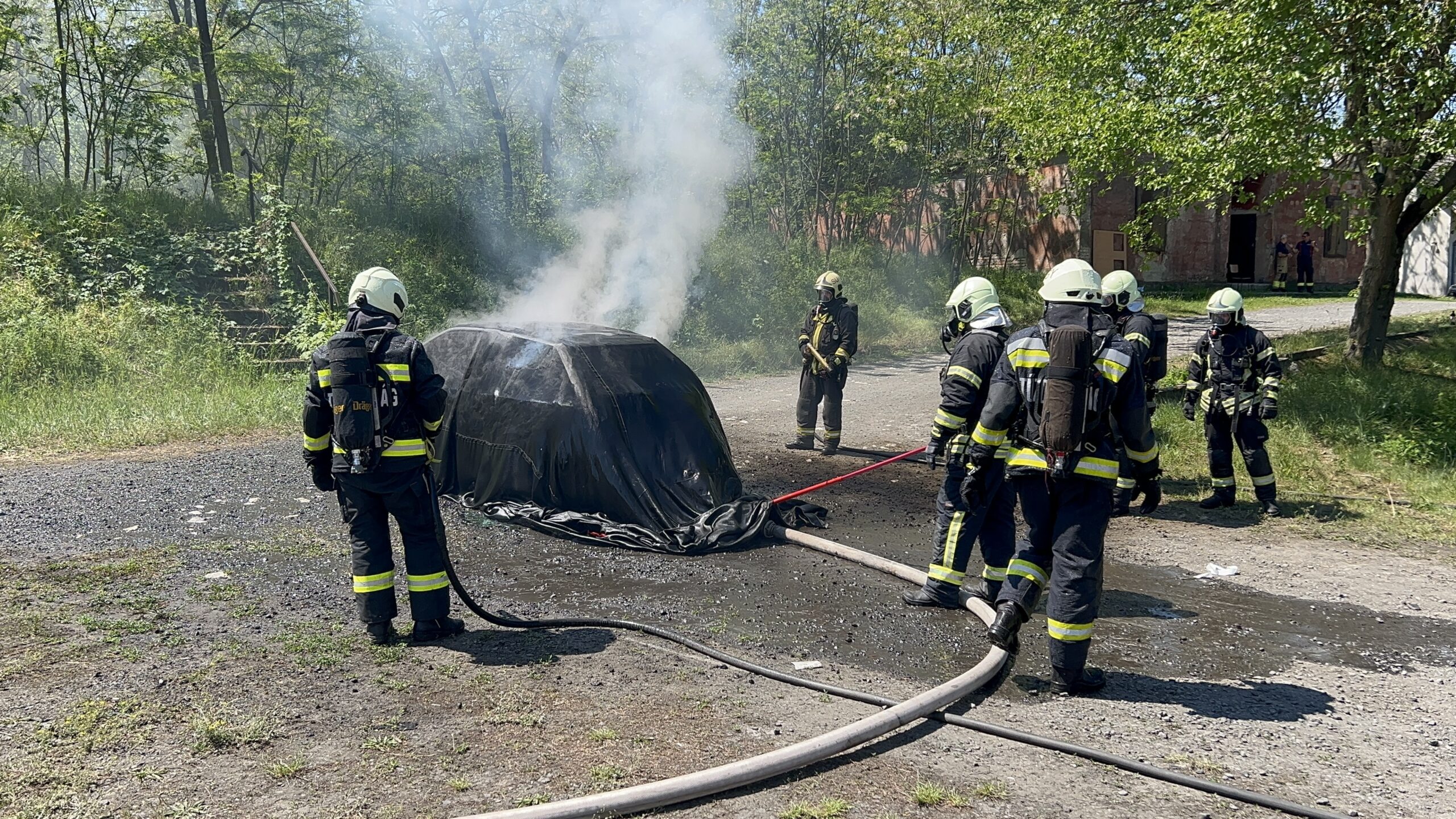
Electric vehicles (EVs) are becoming increasingly common on our roads, in parking garages, onboard ferries and car carriers, at airports, in workshops and at dealerships. While EVs are generally considered safe, fires involving lithium-ion batteries present a very different challenge than conventional petrol or diesel vehicle fires.
One of the most common questions asked online is:
“How do you put out an electric vehicle fire?”
The honest answer is: there is no single solution.
Unlike fires in internal combustion engine (ICE) vehicles, an EV battery fire is caused by thermal runaway; a chain reaction within the battery cells that can continue for hours and repeatedly reignite even after visible flames have been extinguished.
At Fire Isolator, we believe the focus should not simply be on extinguishment, but on containment, cooling and incident control. This philosophy has led us to develop one of the world’s most complete EV fire containment concepts.
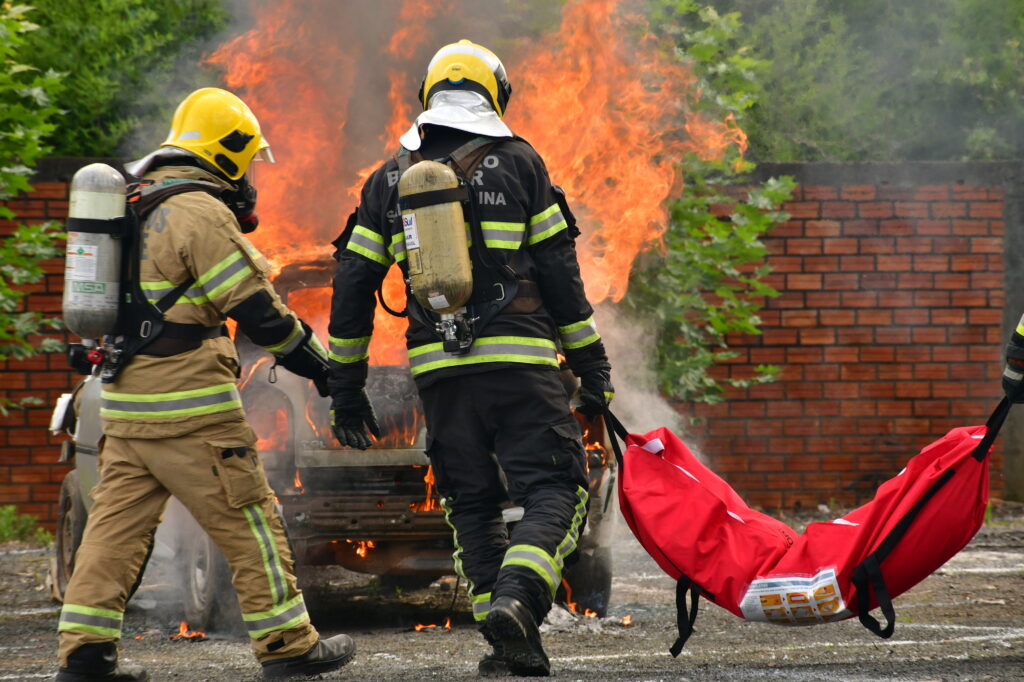
Why electric vehicle fires are different
When a lithium-ion battery enters thermal runaway, temperatures inside the battery pack can exceed 1,000°C, while large quantities of flammable and toxic gases are released.
Unlike a fuel fire, a battery fire can:
- Reignite hours or even days later
- Continue burning internally after external flames disappear
- Produce toxic gases such as hydrogen fluoride (HF)
- Generate high-pressure gas venting
- Cause neighbouring battery cells to enter thermal runaway
This makes EV fires fundamentally different from conventional vehicle fires and requires a different firefighting strategy.
Methods that have proven to be ineffective
As electric vehicles have become more common, numerous firefighting methods have been proposed. Unfortunately, many have shown significant limitations during real-world incidents.
Simply spraying large amounts of water
One of the most common approaches is to apply large quantities of water from outside the vehicle.
While water remains an essential cooling agent, external water application alone, via a focused beam of water aimed at the roof of the car, often fails to stop thermal runaway inside the battery pack. Firefighters may use tens of thousands of litres of water, only to experience repeated reignition because the battery cells remain hot.
Water should therefore be viewed as one element of an overall containment strategy rather than a complete solution. This is a mindset change moer than anything else, as most firefighters are expectinga good result using just water or foam, based on the fact that those methods used to be able to extinguish almost any car fire.
Waiting for the battery to burn itself out
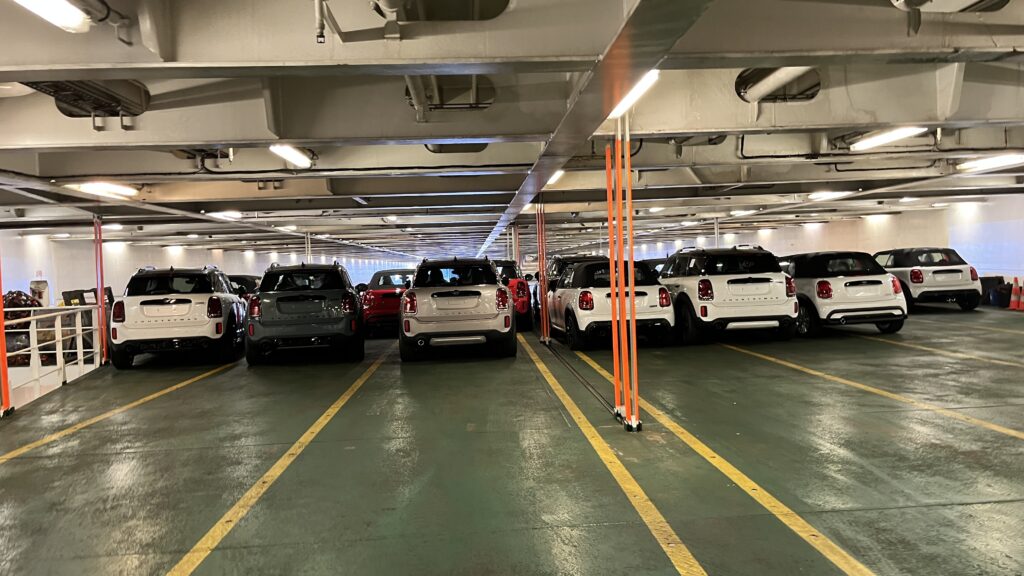
Some organisations choose to establish a safety perimeter and allow the battery to burn until all energy has been released. This is not an option when the car is parked inside a parking garage/parkade, on a car carrier or roro ferry.
Although letting it burn out on the spot may sometimes be operationally necessary, it has significant disadvantages:
- Long incident duration
- Extensive smoke production
- Continued release of hazardous gases
- Increased risk of fire spread
- Major disruption to infrastructure, roads or parking facilities
In many locations, allowing an EV to burn uncontrolled is simply not an acceptable option.
Completely sealing the vehicle beneath an airtight blanket
Several EV fire blankets on the market are manufactured with fully coated materials that trap gases beneath the blanket.
During thermal runaway, lithium-ion batteries release large quantities of flammable gases and vapours. If these gases are unable to escape, pressure can build beneath the blanket, increasing the risk of a deflagration when an ignition source is present.
For this reason, Fire Isolator has taken a fundamentally different engineering approach.
Fire Isolator: A complete EV fire containment concept
Rather than relying on one product, Fire Isolator has developed a complete system that combines:
- Fire containment
- Flame suppression
- Battery cooling
- Thermal runaway intervention
- Operational procedures
- Training
This integrated approach has been validated through more than 15 live electric vehicle fire tests, more than any other company in the EV fire containment sector.
Step 1: Contain the incident with a Fire Isolator EV Fire Blanket
The first priority during an EV fire is preventing the fire from spreading to nearby vehicles, buildings or critical infrastructure.
→ EV Fire Blankets
Fire Isolator EV Fire Blankets are specifically engineered for lithium-ion battery fires.
Unlike fully coated blankets, Fire Isolator blankets are designed to allow controlled ventilation of gases and vapours released during thermal runaway while continuing to contain:
- Flames
- Heat
- Flying debris
- Burning battery fragments
This controlled ventilation helps minimise the risk of dangerous gas accumulation and potential deflagration beneath the blanket, while maintaining effective containment of the incident.
The blankets have been independently tested and certified to international standards and are available in multiple sizes for passenger vehicles, commercial vehicles and smaller lithium-ion battery applications.
Step 2: Suppress flames beneath the blanket
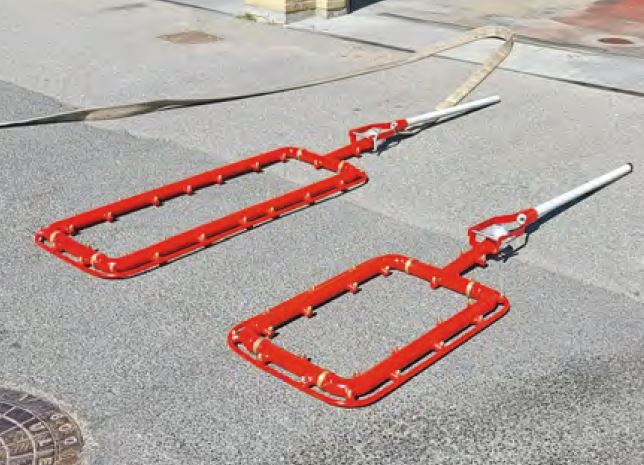
While the blanket contains the incident, Fire Isolator potassium nitrate Aerosol Suppression Units can be deployed underneath the vehicle.
→ Fire Isolator Aerosol Units
The aerosol units rapidly suppress visible flames beneath the blanket, reducing fire intensity and improving overall incident control. During all of our tests, we have seen the temperature drop underneath the blanket by several hundreds of degrees Celsius.
This creates a safer working environment for emergency responders while helping prevent fire spread to surrounding vehicles or structures.
Step 3: Cool the surrounding area using Water Mist
Cooling remains an essential part of every EV fire response.
→ Water Mist Products
Fire Isolator’s Water Mist systems can be used to cool:
- The vehicle exterior
- Underbody (indirectly cooling the batter pack)
- Adjacent vehicles
- Structural elements
- Surrounding equipment
Water mist also helps improve visibility and reduce heat exposure for firefighters operating close to the incident. The water mist should be created with small water droplets, as those droplets are better capable of cooling an area than a focussed beam of water.
Step 4: Stop thermal runaway at its source
The most effective way to stop thermal runaway is to cool the battery cells directly.
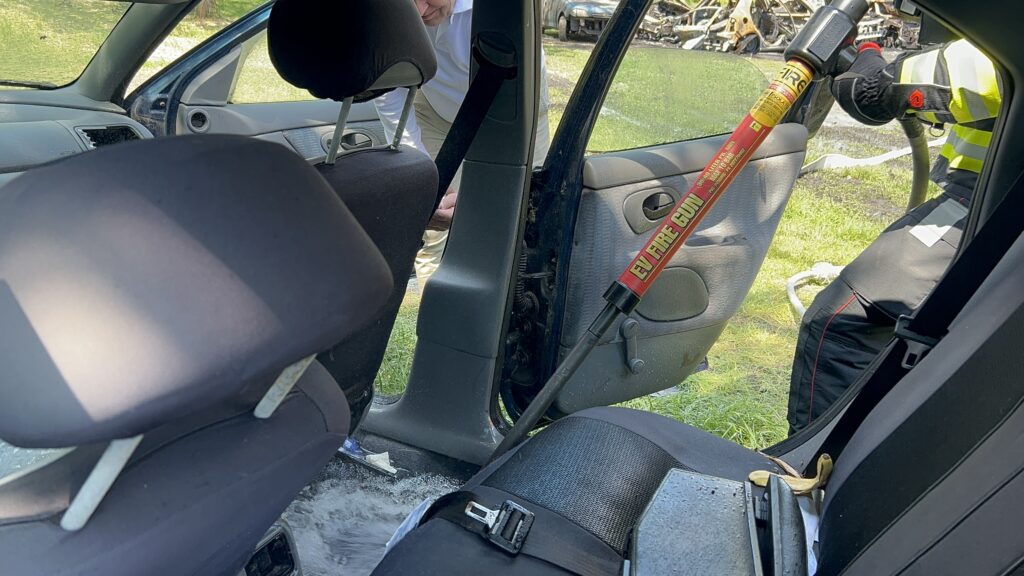
→ EV Fire Gun
The Fire Isolator EV Fire Gun allows trained firefighters to safely penetrate the battery enclosure and deliver cooling water directly into the battery pack.
Compared with relying solely on external cooling, direct battery cooling can:
- Improve cooling efficiency
- Reduce water consumption
- Shorten intervention times
- Help stop thermal runaway at its source
The EV Fire Gun has been designed as a compact, rapidly deployable solution suitable for use in confined spaces such as parking garages, tunnels, workshops and transport vessels.
Why containment is the future of EV firefighting
For many years, the question has been:
“How do we extinguish an electric vehicle fire?”
Increasingly, fire services are asking a different question:
“How do we safely contain and control an electric vehicle fire?”
This shift reflects the reality that lithium-ion battery fires behave differently from conventional vehicle fires.
By combining containment, suppression, cooling and direct battery intervention, emergency responders can significantly improve control of the incident while reducing risks to people, property and the environment.
Fire Isolator: Specialists in electric vehicle fire containment
Fire Isolator has spent years developing specialised solutions for lithium-ion battery incidents.
Today, our complete EV fire containment concept includes:
- EV Fire Blankets
- Lithium Battery Fire Blankets
- Aerosol Suppression Units
- Water Mist Systems
- EV Fire Gun battery penetration technology
- Training and operational procedures
Our products are used by fire departments, airports, parking operators, automotive manufacturers, workshops, ports, shipping companies, ferry operators and many of the world’s largest car carriers.
With the industry’s most extensive programme of live EV fire testing and one of the most comprehensively certified product portfolios available, Fire Isolator continues to help organisations prepare for the evolving challenges of electric vehicle fires.
Learn more
Whether you are a fire department, parking operator, airport, ferry company, automotive business or industrial organisation, Fire Isolator can help you develop an effective EV fire containment strategy.
Explore our complete range of EV fire containment solutions: