


EV Firefighting & Fire Containment Demonstration in Kosovo
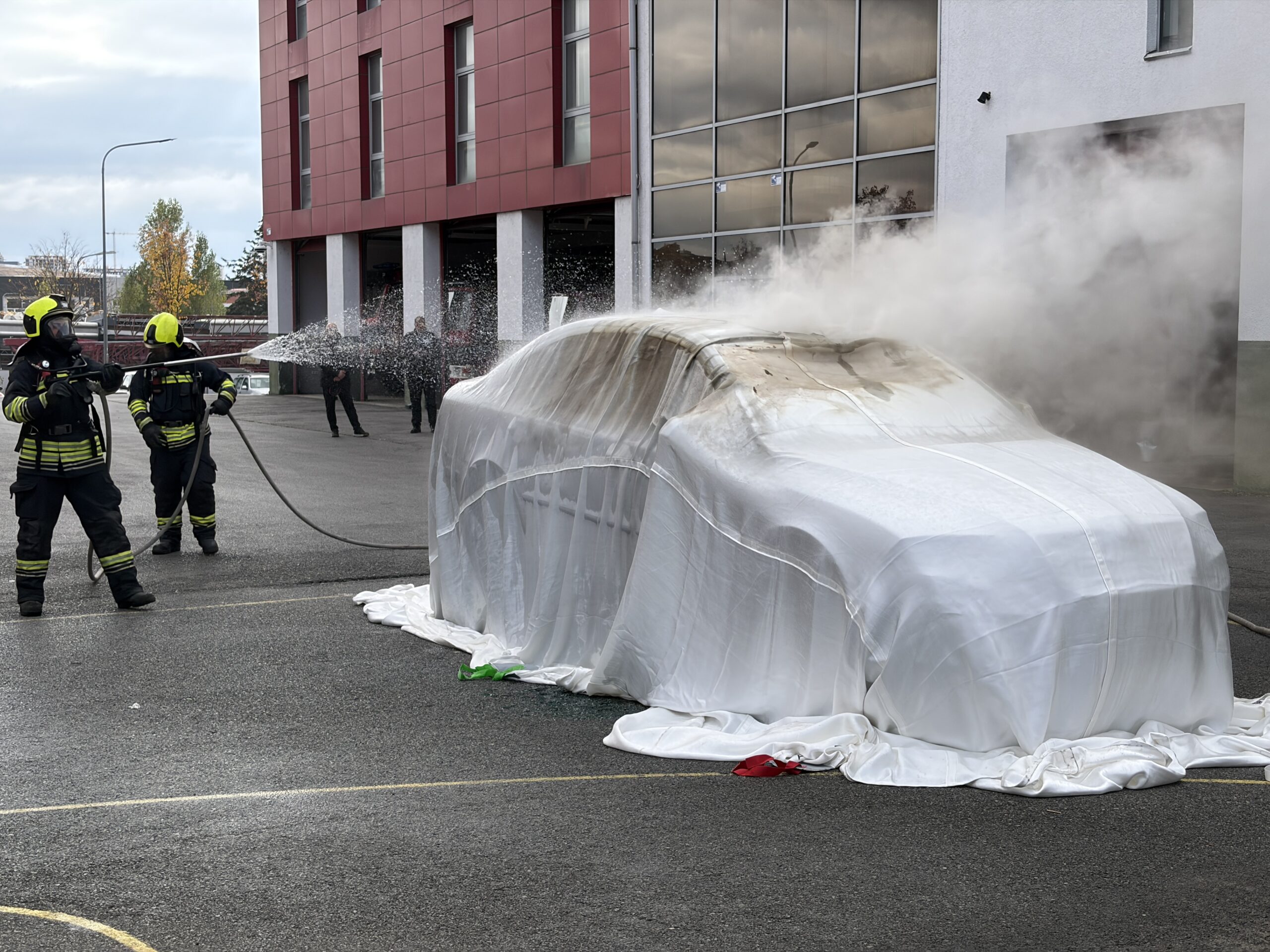
Fire Isolator and local partner Exbatt demonstrate electric vehicle fire containment using the Ultimate EV fire blanket, aerosol fire suppression and water mist cooling.
Live EV firefighting demonstration for the Pristina Fire Brigade
How can firefighters contain an electric vehicle fire involving lithium-ion battery thermal runaway?
During a live EV firefighting demonstration in Pristina, Kosovo, Fire Isolator and our local partner Exbatt demonstrated an integrated approach to electric vehicle fire containment for members of the Pristina Fire Brigade and a group of industry experts.
The event combined a technical presentation with a practical fire demonstration, focusing on the challenges associated with electric vehicle battery fires and the importance of using complementary firefighting techniques.
To simulate an EV battery fire, several lithium-ion batteries using both NMC and LFP chemistries were deliberately brought into thermal runaway. After allowing the fire to develop, the team deployed the Fire Isolator Ultimate FI-BL0906 EV fire blanket, followed by aerosol fire suppression units and water mist cooling.
The objective was to demonstrate how these technologies can work together to contain a developing fire, suppress external flames and support cooling operations.
Watch the live EV firefighting demonstration in Kosovo
Simulating an EV battery fire with NMC and LFP lithium-ion batteries
Electric vehicle fires present particular challenges for firefighters, especially when the high-voltage lithium-ion battery becomes involved.
One of the most significant challenges is thermal runaway, a process in which a battery cell undergoes uncontrolled self-heating. Under certain conditions, this can spread to neighbouring cells, releasing heat, flammable gases and potentially causing sustained combustion.
For the demonstration in Kosovo, several batteries using two widely applied lithium-ion chemistries were deliberately brought into thermal runaway:
- NMC (Nickel Manganese Cobalt): A battery chemistry commonly used in electric vehicles because of its high energy density.
- LFP (Lithium Iron Phosphate): A battery chemistry increasingly used in electric vehicles and energy storage systems, generally offering greater thermal stability than NMC, although thermal runaway remains possible.
By allowing the fire to develop before intervention, the demonstration provided firefighters and industry specialists with an opportunity to observe the behaviour of lithium-ion batteries during a developing fire.
It also illustrated why EV firefighting requires a coordinated approach involving fire containment, suppression and cooling rather than relying on a single piece of equipment.
Containing the EV fire with the Fire Isolator Ultimate fire blanket
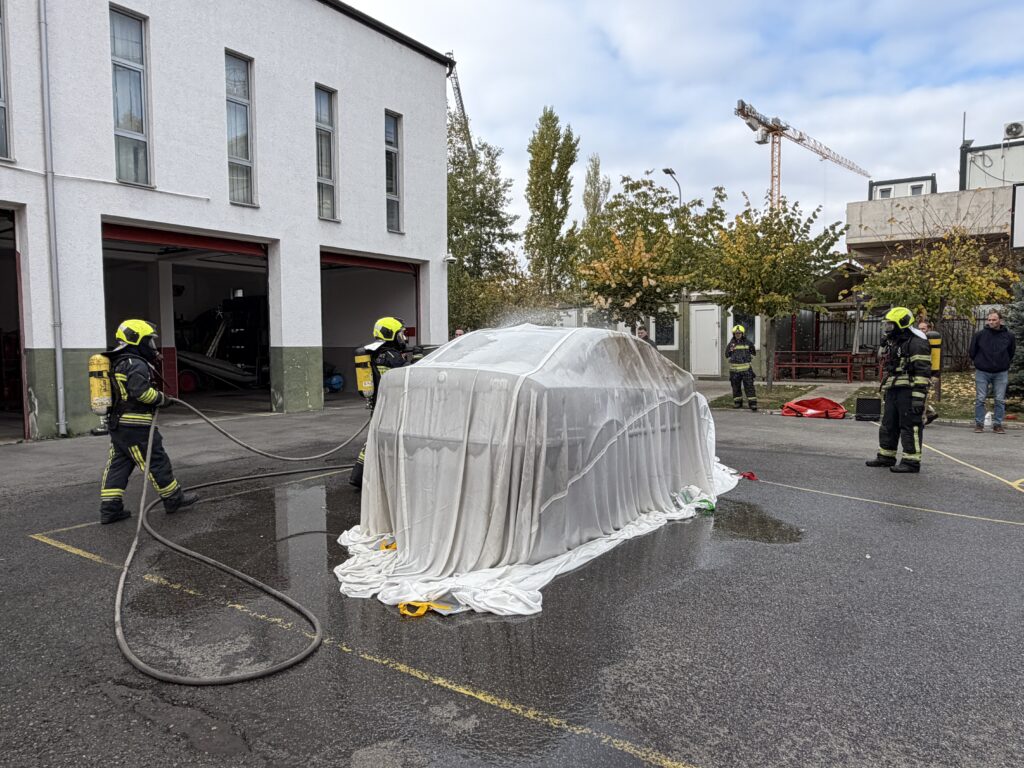
The first stage of the intervention involved deploying the Fire Isolator Ultimate FI-BL0906 fire blanket over the simulated burning vehicle.
The Ultimate EV fire blanket is designed for high-temperature fire containment and helps firefighters isolate a vehicle fire from its surroundings.
By covering the burning vehicle, the blanket helps:
- Contain external flames and limit fire spread.
- Reduce radiant heat exposure to nearby vehicles and infrastructure.
- Limit the impact of the fire on the surrounding environment.
- Create time for firefighters to prepare and carry out additional interventions.
An important distinction is that an EV fire blanket does not necessarily extinguish thermal runaway inside a lithium-ion battery.
Its primary function is to contain the external fire and help limit its consequences while firefighters assess and manage the continuing battery hazard.
This makes fire blankets particularly relevant for EV fire containment in parking garages, vehicle workshops, car dealerships, ferry terminals, logistics facilities and other locations where a vehicle fire could cause significant secondary damage.
Aerosol fire suppression as part of the EV firefighting strategy
Following the deployment of the Ultimate EV fire blanket, the demonstration continued with the use of Fire Isolator aerosol fire suppression units.
Aerosol suppression technology is designed to interfere with the chemical chain reactions involved in flaming combustion.
When used in combination with a fire containment blanket, aerosol units can help suppress external flames within the covered area.
The combination of the fire blanket and aerosol suppression illustrates two complementary functions:
- Fire containment: The blanket helps isolate the burning vehicle and limit flame spread and radiant heat exposure.
- Fire suppression: The aerosol units help suppress flaming combustion within the contained area.
However, aerosol suppression should not be confused with direct battery cooling. A lithium-ion battery experiencing thermal runaway may continue generating heat even when visible external flames have been suppressed.
For this reason, additional cooling and continued assessment remain important parts of an EV fire response.
Cooling the vehicle with water mist
The next stage of the demonstration involved applying water mist for cooling.
Water-based cooling plays an important role in managing the heat generated during electric vehicle fires.
Water mist can absorb heat from exposed surfaces and help reduce temperatures around the vehicle, supporting the overall containment and suppression process.
During the Kosovo demonstration, water mist was used in combination with the Ultimate EV fire blanket and aerosol suppression units. Learn more about Fire Isolator Watermist Applicators.
No battery penetration was performed during this demonstration.
The focus was specifically on showing the combined application of external fire containment, aerosol suppression and water mist cooling.
It is important to distinguish external cooling from direct cooling of battery cells. Depending on the vehicle design and battery condition, external cooling may not reach all cells involved in thermal runaway.
Firefighters must therefore continue assessing the incident and determine whether additional intervention is necessary.
Why EV firefighting requires an integrated approach
The live demonstration in Pristina highlighted an important principle behind the Fire Isolator concept: there is no single-product solution for every electric vehicle battery fire.
Different firefighting tools address different aspects of the incident.
An EV fire blanket helps contain external flames and reduce exposure to surrounding vehicles and structures. Aerosol suppression can help control flaming combustion, while water mist provides additional cooling.
Together, these techniques offer firefighters a coordinated approach to managing the external effects of a battery fire.
The appropriate response depends on the circumstances, including the vehicle’s condition, battery involvement, available equipment and the risks faced by emergency responders.
Continued monitoring is important because a reduction in visible flames does not necessarily mean that thermal runaway has ended or that the battery is safe.
The aim of the Fire Isolator concept is to provide firefighters with complementary tools that help them control the incident, limit collateral damage and create better conditions for further intervention.
Practical EV fire training for the Pristina Fire Brigade
The demonstration also provided an opportunity to discuss the practical challenges of electric vehicle firefighting with members of the Pristina Fire Brigade and industry experts.
As electric vehicles become increasingly common, fire and rescue services must prepare for incidents involving high-voltage battery systems and lithium-ion thermal runaway.
Live demonstrations help emergency responders understand the capabilities and limitations of different fire containment and suppression techniques.
They also provide an opportunity to observe how the equipment can be deployed in sequence during an incident.
By demonstrating the Ultimate FI-BL0906 fire blanket, aerosol suppression units and water mist cooling together, Fire Isolator and Exbatt presented a practical example of an integrated EV fire response.
Frequently asked questions about EV fire containment
Can an EV fire blanket extinguish a lithium-ion battery fire?
An EV fire blanket is primarily intended to contain external flames, reduce radiant heat exposure and help prevent fire spread. It does not necessarily stop thermal runaway inside the battery. Additional cooling and firefighting intervention may be required.
What is the difference between EV fire containment and EV fire suppression?
EV fire containment focuses on isolating the fire and limiting its impact on the surrounding environment. Fire suppression focuses on reducing or extinguishing flaming combustion. Both can form part of an electric vehicle firefighting strategy, but neither automatically guarantees that battery thermal runaway has stopped.
How can firefighters control an electric vehicle battery fire?
Depending on the incident, firefighters may use a combination of EV fire blankets, aerosol suppression, water-based cooling and temperature monitoring. Additional techniques may be required to address continuing thermal runaway inside the battery.
What types of lithium-ion batteries were used in the Kosovo demonstration?
The demonstration involved both NMC (Nickel Manganese Cobalt) and LFP (Lithium Iron Phosphate) batteries. These battery chemistries are commonly used in electric vehicles and have different thermal characteristics.
Was the battery compartment penetrated during the Kosovo demonstration?
No. The Kosovo demonstration focused on the deployment of the Ultimate FI-BL0906 EV fire blanket, aerosol fire suppression units and external water mist cooling. No battery penetration was performed.
For additional information, visit our EV fire containment FAQ.
Fire Isolator and Exbatt: Supporting EV fire safety in Kosovo
Fire Isolator would like to thank our local partner Exbatt for their cooperation in organising this event, as well as the Pristina Fire Brigade and all participating industry experts for their interest and involvement.
As the number of electric vehicles continues to grow, practical demonstrations and technical knowledge sharing are increasingly important for professional emergency responders.
The demonstration in Kosovo provided an opportunity to see how different fire containment and suppression technologies can be combined as part of a coordinated approach to electric vehicle firefighting.
Watch the demonstration: EV firefighting demonstration in Kosovo on YouTube.
Learn more about our EV fire containment solutions: Explore Fire Isolator products or visit our technical downloads.
For more information about Fire Isolator products, technical documentation or dealer opportunities, contact us at sales@fireisolator.com.